





Lead conversion tracking in Kennesaw helps a service business see which marketing leads actually become scheduled jobs, not just which ads, pages, or directories generate activity. The practical goal is to connect the first inquiry, the follow-up process, the booking decision, and the final job value in one usable view.
For home-service, field-service, senior care, professional-service, franchise, and multi-location teams, the important question is not only “Where did the lead come from?” It is “Which sources bring people who answer the phone, fit our service area, book the work, and create real revenue?”
A useful tracking process starts with clean lead source capture, adds sales or dispatch outcomes, and gives owners a way to compare lead quality by channel. InTune Marketing helps service businesses build that connection through lead conversion and revenue attribution, practical AI integration, human-led QA, and cross-channel execution.
Booked work is the outcome that matters most
Booked work gives marketing data a business meaning because it separates casual inquiries from real customer demand. A roofing company may receive several form fills after a storm, but only some of those homeowners may be inside the service area, ready for an inspection, and able to schedule.
A plumbing, HVAC, senior care, legal, cleaning, or repair business can face the same issue. A phone call may look valuable in a dashboard, but it may turn out to be a vendor pitch, a wrong-number call, a customer outside Cobb County, or a request for a service the company does not provide.
Tracking booked work lets an owner compare channels by the next step that actually affects the schedule. Paid search, organic search, local listings, referral partners, social posts, direct mail, and email campaigns can all look different once the business sees which leads become appointments, estimates, consultations, or dispatched jobs.
A lead record needs more than a name and phone number
A useful lead record captures the details needed to judge source, fit, urgency, follow-up, and outcome. At minimum, a service business should know where the inquiry came from, what the customer asked for, whether the customer was contacted, and whether the work was booked.
The source field should be specific enough to be useful. “Internet” is too broad when the lead may have come from Google Ads, Google Business Profile, organic search, a landing page, a directory profile, a referral link, or a returning customer who searched the company name.
The customer request also matters. A garage door company may want to separate emergency repair from new door installation. A home-care provider may need to distinguish a family exploring options from someone ready for an assessment. A law firm may need to separate a qualified case type from a general question.
The outcome field should use plain language that the team will actually apply. Common examples include booked, quoted, not a fit, no answer, duplicate, outside service area, price shopper, existing customer, canceled, and completed.
Phone calls, forms, chats, and texts should feed the same picture
Lead tracking breaks down when each contact method lives in a different place. Calls may sit in a call tracking platform, website forms in email, chat transcripts in another dashboard, and text replies on a dispatcher’s phone.
A Kennesaw service-area business that works across Marietta, Acworth, Smyrna, and Metro Atlanta often cannot judge performance from one channel alone. A customer may click an ad on a phone, call from the website, miss the first callback, reply by text, and book after speaking with the office.
The practical fix is not always a bigger software stack. It is a cleaner handoff. Every inquiry should land somewhere the team can update it with the same basic outcome fields. A customer relationship management system, booking platform, spreadsheet, or dispatch tool can work if the fields are clear and people use them consistently.
Call recordings and form details can also help with quality review. If one campaign produces many calls asking for a service the business does not offer, the issue may be message fit rather than follow-up skill.
Source tracking should connect the first touch to the final decision
Marketing attribution for service businesses means assigning credit to the marketing activity that helped create a lead or customer. In plain English, it answers which effort helped the phone ring, which effort helped the customer trust the business, and which effort led to booked work.
A simple setup may track the first known source, such as a search ad or organic landing page. A more complete setup may also track the last action before the customer called, such as a service page visit, map listing click, review page visit, or remarketing ad.
No model is perfect. A homeowner may ask a neighbor, search the business name, read reviews, and call after seeing a truck in the area. A facility manager may compare several providers before sending a form. Attribution should guide better decisions, not pretend that every customer journey is clean.
The best approach for most service businesses is to start with consistent source capture and booked-work outcomes. Once that foundation is dependable, the business can improve the detail without confusing the team.
Lead quality measurement should include fit and follow-up
Lead quality measurement should look at whether the lead was a good business opportunity and whether the team handled it well. A weak lead source and a missed follow-up are different problems, and they require different fixes.
A poor-fit lead may ask for a service outside the company’s scope, a location outside the service area, or a budget that does not match the work. A good-fit lead may still fail to book because the call was missed, the quote was delayed, the customer did not receive a clear next step, or the office could not reach them again.
That distinction matters for owners. If a campaign brings qualified calls but the booking rate is weak, the answer may be call handling, speed of response, scheduling availability, or estimate follow-through. If a campaign brings many wrong-fit inquiries, the answer may be ad targeting, landing page language, local page content, or the offer itself.
For multi-location and franchise teams, the same source can perform differently by location. One branch may book well from local search because follow-up is strong, while another may lose similar leads because calls route poorly or notes are incomplete.
Kennesaw service-area businesses need location consistency
Location consistency matters because service businesses often sell across overlapping local markets. A Kennesaw-based company may serve customers who search from home in Acworth, work near Marietta, compare options in Smyrna, and expect a provider that understands the broader Metro Atlanta service area.
The City of Kennesaw sits in Cobb County, northwest of Atlanta, and local businesses often depend on both neighborhood trust and regional reach. That mix can make lead source reporting messy when campaigns, landing pages, service areas, and phone numbers are not organized around the way customers actually search.
A practical tracking setup should keep location fields clean. The team should be able to see whether a booked job came from Kennesaw, Marietta, Acworth, Smyrna, or another Metro Atlanta community. The same record should also show whether the inquiry matched the intended service page, ad group, listing, or referral source.
This helps owners avoid blaming the wrong thing. A campaign may look weak overall but perform well in one service area. A location page may bring fewer inquiries but higher-value booked work.
Platform data should be matched against real job outcomes
Marketing platforms can report important actions, but owners still need to compare those actions with what happened inside the business. In Google Analytics, an important website action can be marked as a key event; in Google Ads, conversion actions can be used to measure valuable ad-driven activity.
Those platform actions may include form submissions, calls from ads, appointment requests, quote requests, or other business-defined steps. For businesses importing offline conversion data into Google Ads, the current setup may involve Google Ads Data Manager, enhanced conversions for leads, or other supported import options depending on the account and data source.
The business-side question stays the same regardless of tool. Did the lead get answered? Was it qualified? Did it book? Did it become completed work or revenue? A platform conversion that never becomes a real opportunity should not carry the same weight as a lead that turns into a scheduled job.
Human review is still important. Duplicate forms, spam submissions, accidental clicks, unqualified calls, and missed-call recoveries can distort the data if nobody checks the records.
A useful dashboard should help the owner decide what to do next
A lead conversion dashboard should not be a wall of charts. It should help an owner decide where to invest, what to fix, and which follow-up habits create booked work.
The most useful view usually compares source, lead type, service area, contact status, booked outcome, completed outcome, and revenue where available. For example, a pest control company may want to know whether termite inspection leads from organic search book differently than general pest calls from paid search.
A franchise operator may need a location view. If one office receives strong lead volume but weak booked work, the owner can look at call handling, appointment availability, or local offer fit. If another office has lower lead volume but strong conversion, the marketing question may be how to grow that source without lowering quality.
The dashboard should also show cleanup needs. Missing source fields, inconsistent outcome names, duplicate customer records, and uncategorized calls are not small annoyances. They are the places where revenue attribution becomes unreliable.
InTune Marketing connects marketing activity to revenue decisions
InTune Marketing works with small and midsize service businesses that need clearer links between marketing activity, booked work, location consistency, customer trust, operational efficiency, and revenue. The work is broader than content output or single-channel optimization.
Through Lead Conversion and Revenue Attribution, InTune helps businesses think through how leads are captured, how outcomes are tracked, how data moves across tools, and how owners can use the information to make better decisions.
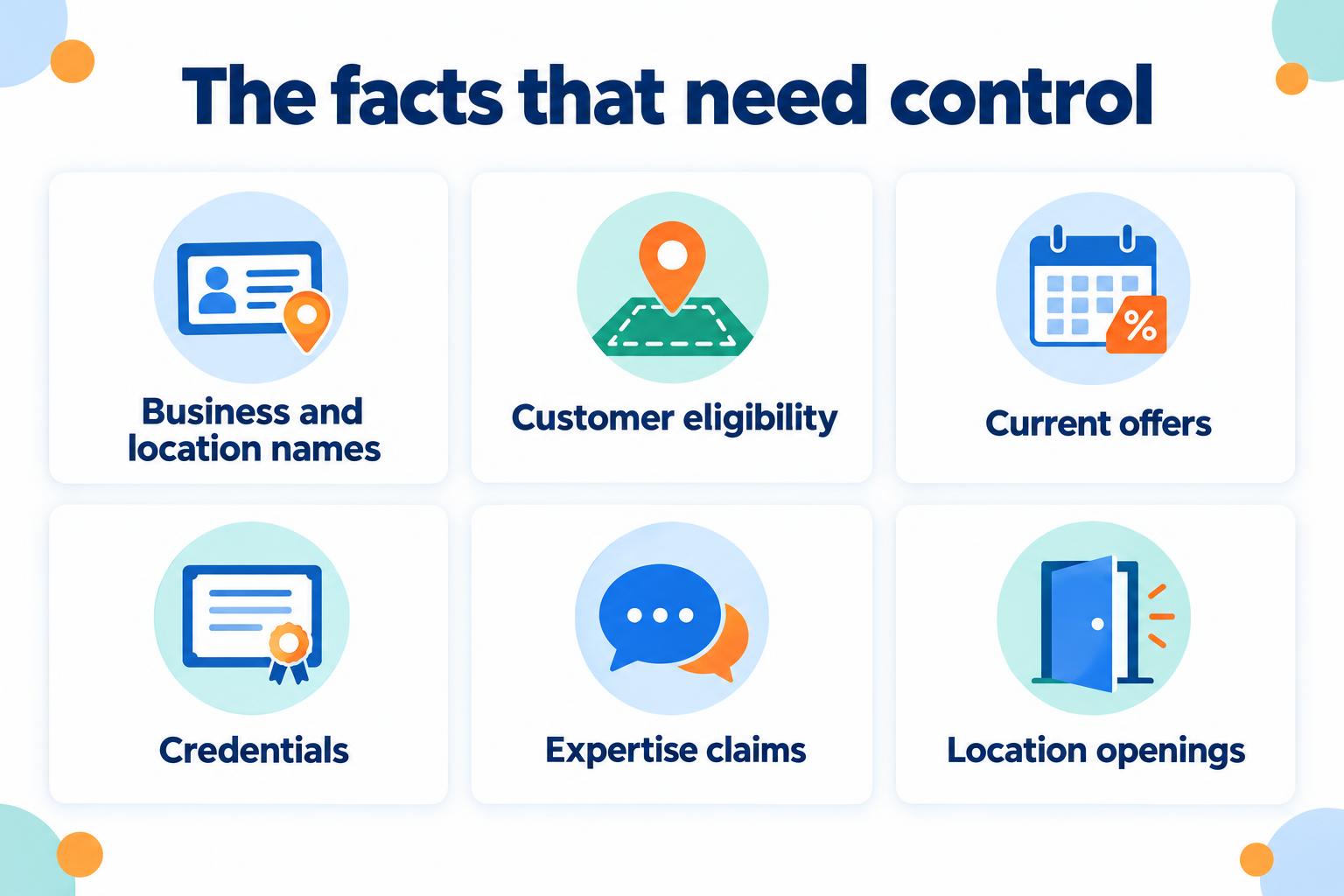
The same work often connects with Client-Specific Knowledge Systems, Cross-Channel Authority Governance, Workflow Integration, Human Review and Factual QA, and AI Visibility Measurement. Those services help keep customer-facing information accurate while making the internal process easier to trust.
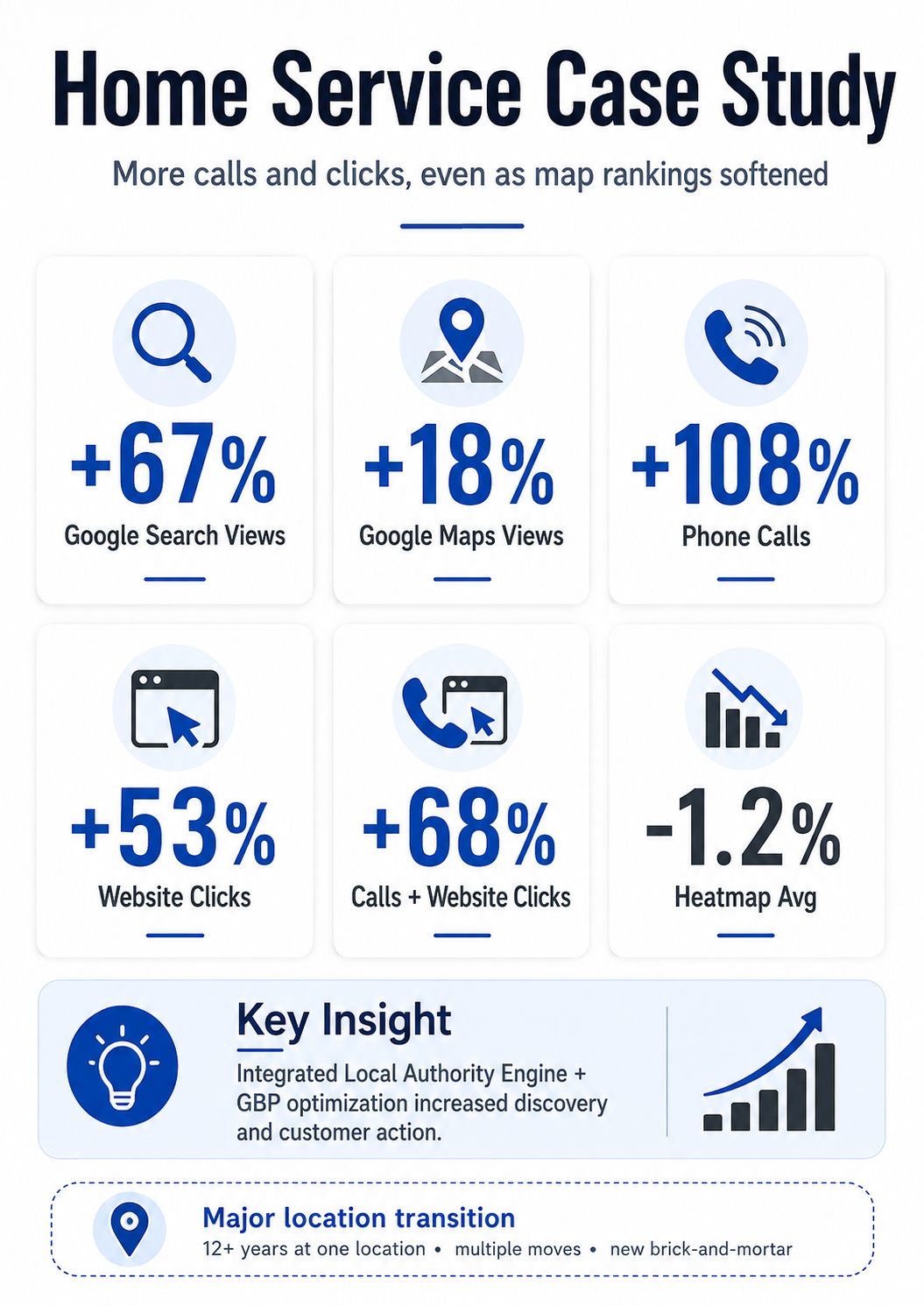
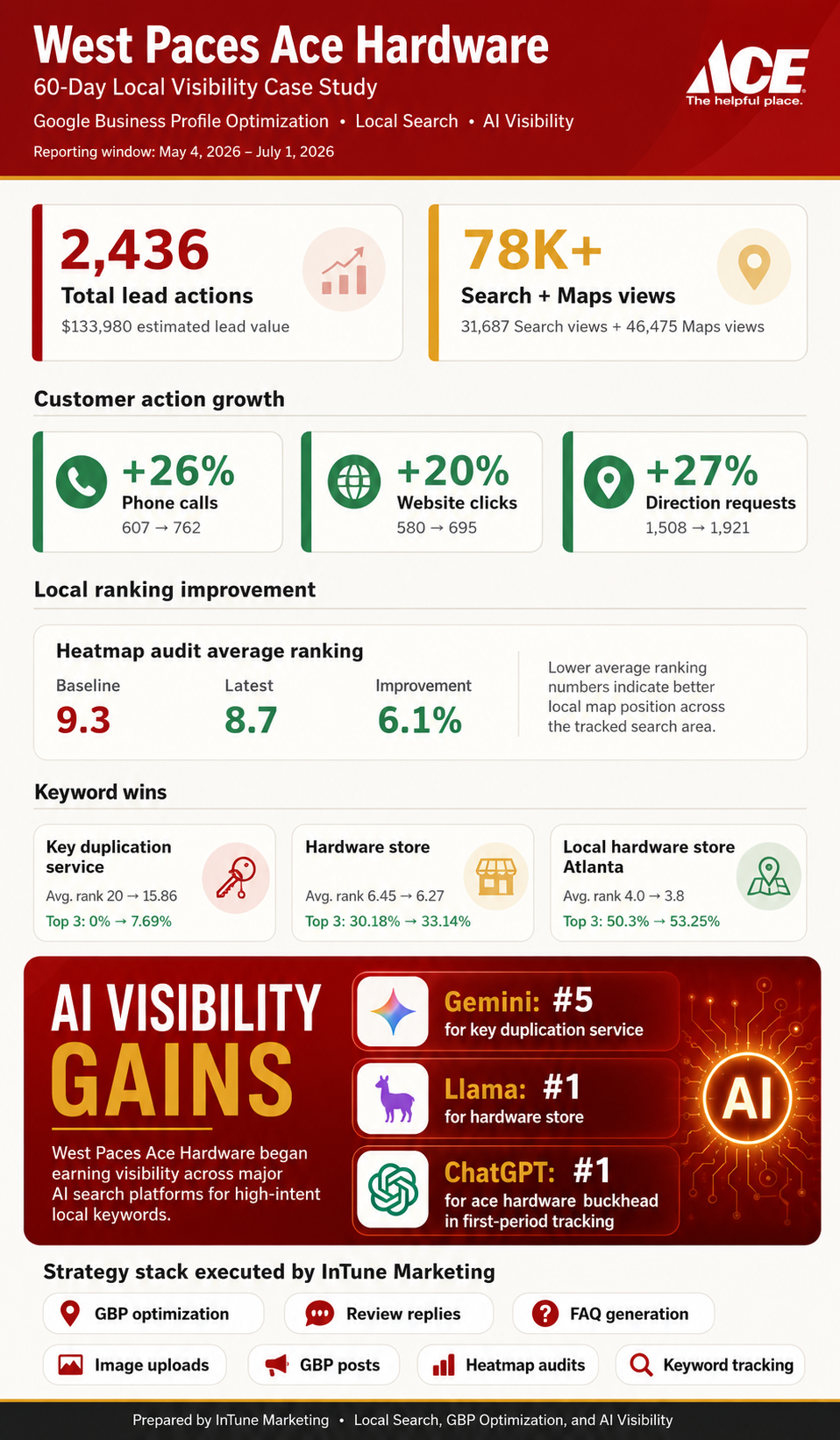
InTune brings 25+ years of leadership experience, cross-channel execution, Local Authority Engine thinking, measurable client case studies, human-led QA, and practical AI integration to the work. The focus is usable business clarity: which marketing efforts create qualified demand, which leads become booked work, and where the process needs attention.
The right next step is a tracking map before another campaign push
Before spending more on traffic, a service business should map how a lead moves from first contact to booked work. That map should name each source, each handoff, each field the team updates, and each point where a lead can be lost.
A Kennesaw HVAC company might discover that after-hours calls are not being tagged correctly. A professional-services firm might learn that high-quality consultation requests are mixed with general contact forms. A multi-location operator might find that each office uses a different outcome name for the same result.
Once those gaps are visible, marketing decisions get sharper. The business can adjust campaigns, rewrite service pages, improve routing, clean up dashboards, and train the team around the steps that actually lead to booked work.
If your team needs a clearer way to connect leads, follow-up, booked jobs, and revenue decisions, schedule a strategy consultation with InTune Marketing.
Frequently Asked Questions
What is the difference between a lead and booked work?
A lead is the initial inquiry, such as a call, form, chat, or referral. Booked work means the inquiry moved far enough to become a scheduled job, appointment, estimate, consultation, or other defined business outcome. The exact booked stage should match how the company sells and delivers its service.
Can a small service business track lead conversion without a full CRM?
Yes, a smaller team can start with a shared spreadsheet or booking tool if every inquiry gets the same basic fields: source, customer need, location, contact status, outcome, and job value when available. A CRM becomes more useful when lead volume, locations, or follow-up steps become hard to manage manually.
Why do marketing reports show leads that the office does not consider qualified?
Marketing platforms often count actions such as calls, forms, or clicks before the business knows whether the person is a good fit. A lead can be unqualified because of service type, location, timing, budget, duplicate submission, or spam. Adding outcome fields inside the business system helps separate raw activity from real opportunities.
Should calls and form submissions be measured the same way?
They should roll into the same reporting view, but they should not be treated as identical. Calls often reveal urgency and fit quickly, while forms may need more follow-up before the team knows whether the customer is serious. Keeping the contact method as a field lets the owner compare quality by channel.
How should a franchise or multi-location business compare booked work by location?
Each location should use the same outcome names and source categories so performance can be compared fairly. If one location labels an estimate as booked and another labels it as pending, the data will make one office look stronger even when the real pipeline is similar.
What should be checked when booked-work tracking looks wrong?
Start with missing source fields, duplicate leads, call tracking numbers, form routing, manual notes, and outcome names. Also check whether office staff, technicians, intake teams, and managers use the same definitions for booked, quoted, canceled, completed, and not a fit.